
Swipe right
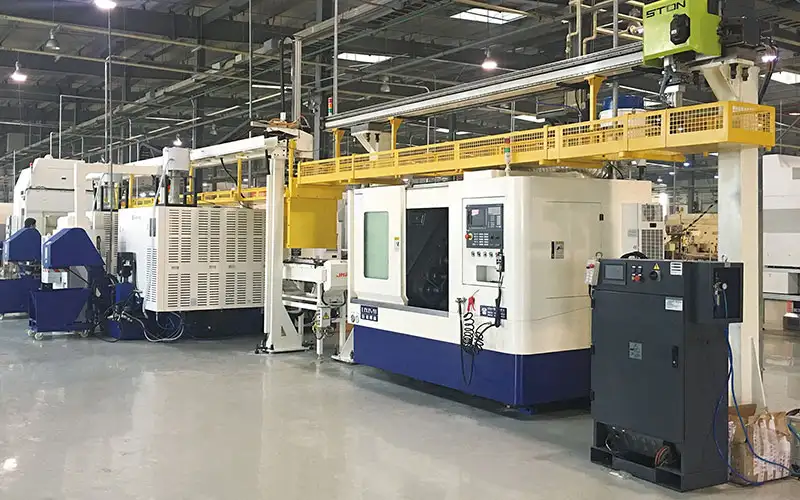
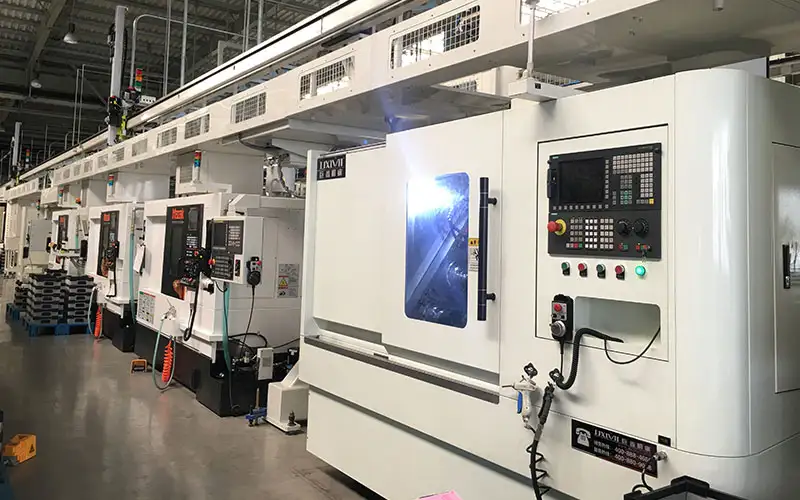
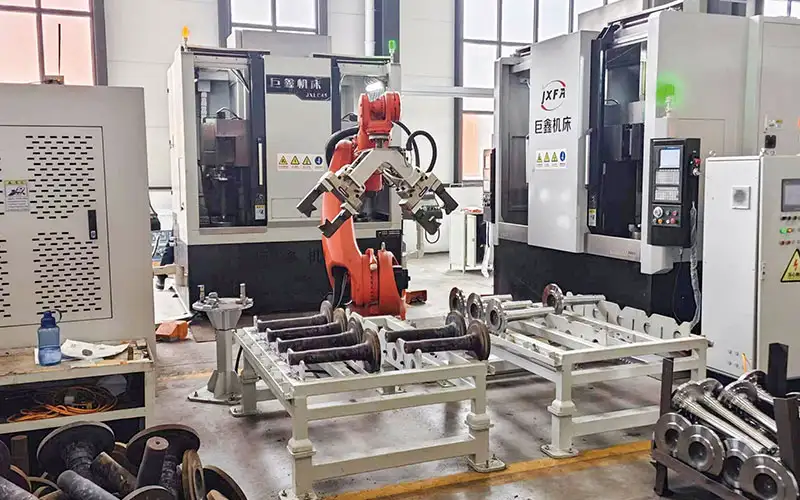
A camshaft manufacturer in Cixi, Zhejiang: A 16-year service record of a Juxin KPD70-680A center-drilling machine.
Why can a center‑drilling machine remain in service at the production site for 16 years?
The value of a machine tool is not only reflected in the processes it can perform when first put into production, but also in its ability to continue meeting production requirements after years of sustained use.
In 2010, a camshaft manufacturer in Cixi purchased a Juxin KPD70-680A center-drilling machine for camshaft machining.
At that time, the customer’s problem was clear: Using a conventional lathe to machine the center hole is far too slow.
To address this specific process challenge, the customer opted for a dedicated center-drilling machine.
As of 2026, this equipment has been in service for 16 years. According to customer feedback, it continues to operate reliably, with machining accuracy remaining intact, and can remain in use with routine maintenance.
From the original process requirements to its actual operational performance 16 years later, what makes this case noteworthy is not merely the long service life of the equipment, but rather how the specialized machinery is tailored to support specific machining operations and how its long-term performance has stood up to scrutiny on the shop floor.
I. In 2010, why did customers need dedicated center-drilling machines?
The camshaft is a critical component in power systems such as internal combustion engines, and its manufacturing process encompasses multiple machining operations. For camshafts requiring center-hole machining, the center hole serves not only as a standalone operation but also as an essential datum for subsequent machining, positioning, and workholding.
Although center-hole machining appears to be only a localized operation, for mass production, the suitability of the equipment for this process directly influences the organization of the entire production workflow.
In 2010, this camshaft manufacturer in Cixi encountered a significant issue when using a conventional lathe to machine the center hole: the machining efficiency was excessively slow.
Conventional lathes are highly versatile and can handle a wide range of turning operations. However, when production requirements are focused on specific workpieces or particular processes, general-purpose equipment may not be the most suitable choice.
If a standard lathe is required to handle additional machining tasks and also perform center‑hole machining through appropriate methods, the equipment’s utilization, process sequencing, and operational procedures may all be influenced by a variety of factors.
For companies engaged in the continuous production of camshafts, center‑hole machining is not merely a question of whether it can be done; it also requires assessing whether this process step best meets actual production requirements.
At the time, the customer opted for dedicated equipment precisely to address the relatively low efficiency of conventional lathes in machining center holes.

II. Why does center-hole machining require specialized equipment?
For shaft-type parts, center-hole machining typically requires attention to workpiece positioning, the machining requirements at both ends, and the relationship between the center hole and the subsequent machining datums.
The camshaft has its own structural and process characteristics, and the specific machining plan must be determined in conjunction with the part drawing, machining allowances, center‑hole requirements, and subsequent operations.
From the perspective of equipment selection, the key is not simply to determine whether a conventional lathe or a specialized machine tool is more advanced, but rather to assess whether the equipment’s design aligns with the production requirements.
When machining tasks are relatively fixed and the types of workpieces are clearly defined, dedicated equipment can be designed around the target process, ensuring a closer alignment between the equipment’s functional configuration and the specific machining requirements.
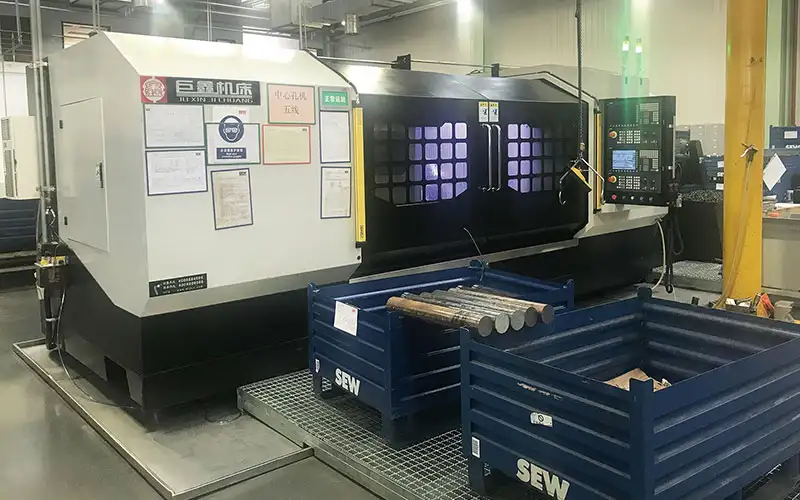
The Juxin KPD70-680A center-hole drilling machine is employed in this enterprise’s camshaft machining, specifically tailored to meet the precise requirement of center-hole processing.
It should be noted that specialized equipment does not guarantee the same efficiency gains for all workpieces. Actual machining performance remains contingent on the workpiece’s geometry, process requirements, equipment configuration, and production organization.
However, for clearly defined center-hole machining tasks, selecting equipment that aligns with the process is a worthwhile consideration in enterprise production‑equipment planning.
III. From the time of procurement in 2010 to 2026, the equipment has been in service for 16 years.
Once the equipment is put into service, the real testing begins.
The Juxin KPD70-680A center-drilling machine, purchased in 2010, has been in production and service for 16 years as of 2026.
According to customer feedback, the equipment continues to operate reliably, with machining accuracy remaining consistent, and requires only routine maintenance in daily use.
These pieces of information are the most noteworthy aspects of this service record.
First, the equipment remains in operation, indicating that it continues to perform actual production tasks rather than simply remaining on-site as idle machinery.
Secondly, customer feedback indicates that machining accuracy is satisfactory. For center-hole machining, accuracy directly affects whether the workpiece can meet the relevant process requirements and also impacts the usability of subsequent machining datums.
Thirdly, the equipment currently requires only routine maintenance, indicating that, based on the customer’s feedback to date, it can continue to be deployed in production under standard maintenance conditions.
Of course, routine maintenance does not mean that the equipment requires no upkeep whatsoever, nor should it be taken to imply that the equipment has never experienced a malfunction or had any components replaced. The long-term operational condition of the equipment should be assessed based on actual customer feedback and maintenance records.
What can be confirmed in this case is that the equipment has been in operation since 2010, for a total of 16 years, and continues to run reliably. The customer reports no issues with machining accuracy.
For manufacturing enterprises that require long-term production investment, such real-world usage data is far more informative than performance claims made in isolation from specific operating conditions.

IV. Long-term service tests not only the equipment itself
The long-term operational performance of machine tools is influenced by factors such as equipment design, manufacturing quality, actual machining loads, operating procedures, maintenance practices, and the production environment.
Therefore, one cannot conclude that all equipment will achieve the same service life simply because a single unit has been in use for an extended period.
However, even when examining a single real-world case, one can still discern a selection approach that deserves close attention: when procuring equipment, it is essential not only to assess whether the current process can be completed but also to evaluate whether the equipment is suitable for long-term production use.
For camshaft manufacturers, center‑hole machining is a specific step in the production process. Once the equipment is commissioned, it must deliver consistent performance across routine machining operations.
If the equipment can continue to meet process requirements over the long term, the enterprise may keep using its existing assets for production, rather than making an immediate decision to replace them simply because their service life has increased.
Of course, whether or not equipment requires an upgrade should also be evaluated comprehensively, taking into account factors such as current process requirements, precision‑testing results, maintenance costs, safety requirements, and the production schedule.
V. Examining the Value of Special-Purpose Machine Tools Through a Case Study of Machining a Central Hole
Back to this KPD70-680A center-drilling machine.
In 2010, due to the relatively slow efficiency of conventional lathes in center‑hole machining, the customer opted for a dedicated center‑hole drilling machine.
In 2026, sixteen years later, the equipment continues to operate reliably, with machining accuracy remaining intact; at present, only routine maintenance is required.
This case does not need to rely on exaggerated efficiency metrics, nor does it require fabricating a narrative about equipment that never experiences failures.
What it demonstrates is a clear chain of facts: the customer had well-defined processing requirements, selected specialized equipment tailored to the relevant process, and that equipment, after 16 years of practical use, continues to meet the customer’s operational needs.
For other enterprises engaged in the production of camshafts, drive shafts, and related shaft components, this case offers a valuable reference point.
When evaluating specialized center‑hole drilling machines, in addition to considering the equipment’s price and initial machining capabilities, it’s also worthwhile to examine its structural design, process compatibility, long-term operational performance, and after-sales maintenance support.
For manufacturing enterprises, the value of equipment ultimately hinges on its performance at the production floor: whether it can execute the required machining operations, meet actual process specifications, and maintain reliable operation over the long term.
VI. The Answer Provided by Time
From 2010 to 2026, sixteen years is far more than just a set of numbers.
It documents the operational history of a dedicated machine tool in an actual production environment, providing a concrete benchmark for its long-term performance.
This Juxin KPD70-680A center‑drilling machine at a camshaft manufacturer in Cixi was initially put into service to address the slow efficiency of conventional lathes when machining center holes. Today, the equipment continues to operate reliably, with customers reporting no issues regarding precision; routine maintenance is sufficient to ensure its ongoing use.
This is the core of this service record.
Juxin Machine Tools specializes in the machining of shafts, discs, housings, and other related rotary components, offering dedicated CNC machine tools, process technologies, and automated line‑integrated solutions. For each type of machining task, equipment selection must be tailored to the specific workpiece, the actual manufacturing process, and the production requirements.
Whether a machine tool can deliver long-term value ultimately hinges on its performance in the production environment.
Meanwhile, this KPD70-680A center‑drilling machine, which has been in service for 16 years, provides a real‑world reference from an actual operating environment.






Contact Us
WhatsApp:
Contact E-mail:
Contact Address: