
Swipe right
Case Study: Precision Turning After Gear Quenching | Juxin JXLC63D Double-Station, Dual-Spindle CNC Vertical Lathe
01 Customer Background: Challenges in Finishing Gear Teeth After Quenching
A gear manufacturing plant in Shandong primarily engages in gear machining. In actual production, workpiece distortion following heat treatment can pose significant challenges for subsequent finishing operations.
Previously, customers machined workpieces by performing finish turning prior to quenching; however, after heat treatment, the workpieces could undergo dimensional changes such as expansion or contraction and warping, leading to ovality in the inner bore, increased runout of the end faces, and displacement of the original machining datum.
For gear workpieces that require tight control of bore roundness, end-face runout, and coaxiality, the microstructural changes occurring after heat treatment directly affect the quality control of subsequent finishing operations and also increase the difficulty of maintaining process consistency in batch production.
The core challenge the customer seeks to address is how to perform precision finishing on workpieces after quenching, thereby enhancing machining accuracy and batch-to-batch consistency in critical areas.
02 Solution: Adoption of the JXLC63D double‑station, dual‑spindle CNC vertical lathe.
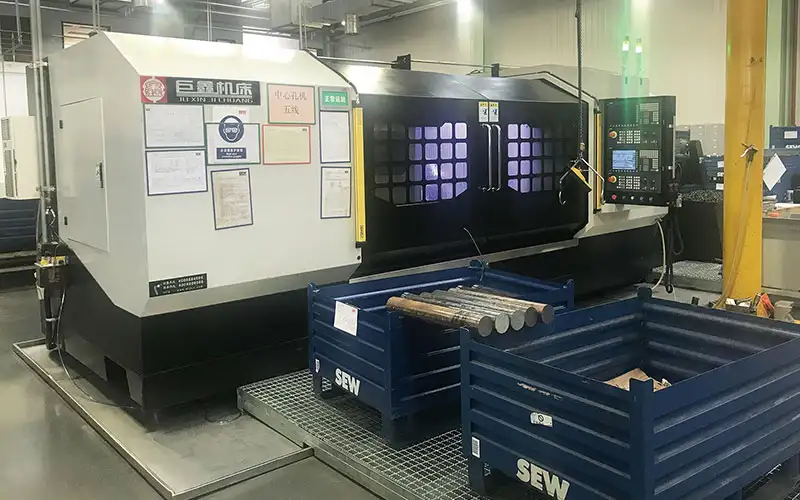
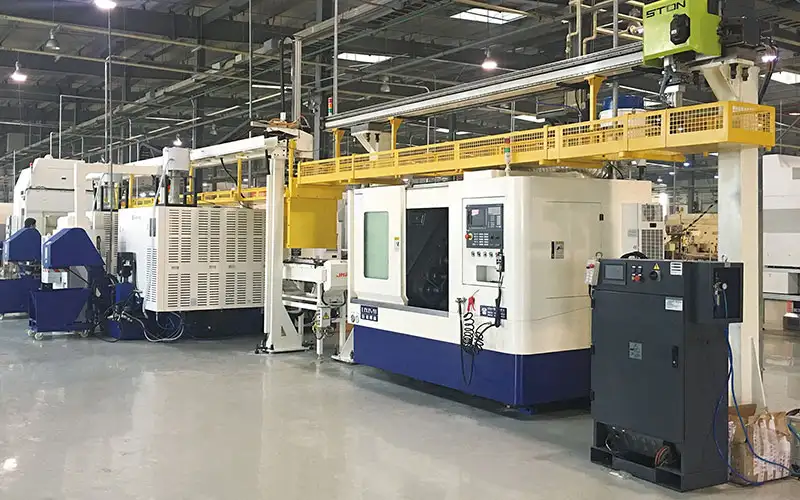
In 2023, a gear manufacturing plant in Shandong purchased a JXLC63D dual‑station, dual‑spindle CNC vertical lathe from Juxin Machine Tool, to perform precision turning operations following gear quenching.
Manufacturing process: After quenching, the internal bore and end faces are precision turned, and the part is then turned over to complete two machining operations.
Unlike the machining approach that completes finish turning prior to quenching, this scheme schedules finish machining after heat treatment, performing operations based on the workpiece’s actual condition following quenching.
By aligning the workpiece’s machining process with the equipment configuration, baseline errors caused by heat‑treatment distortion are minimized, and critical features such as internal bores and end faces are subjected to finish machining.
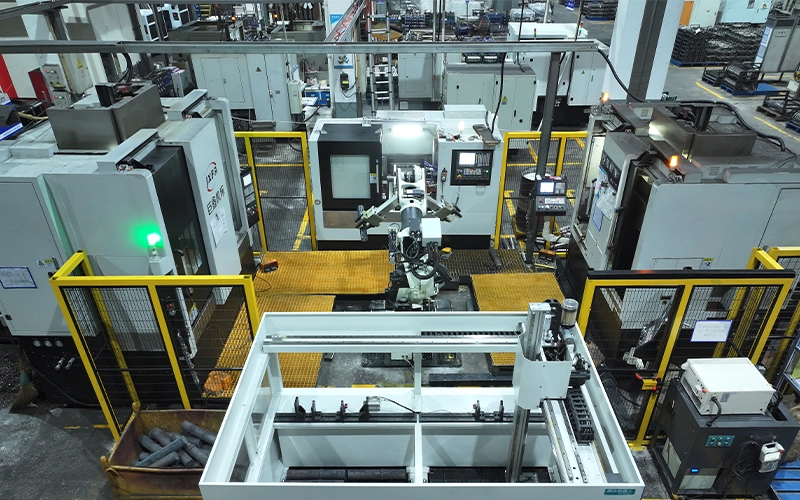
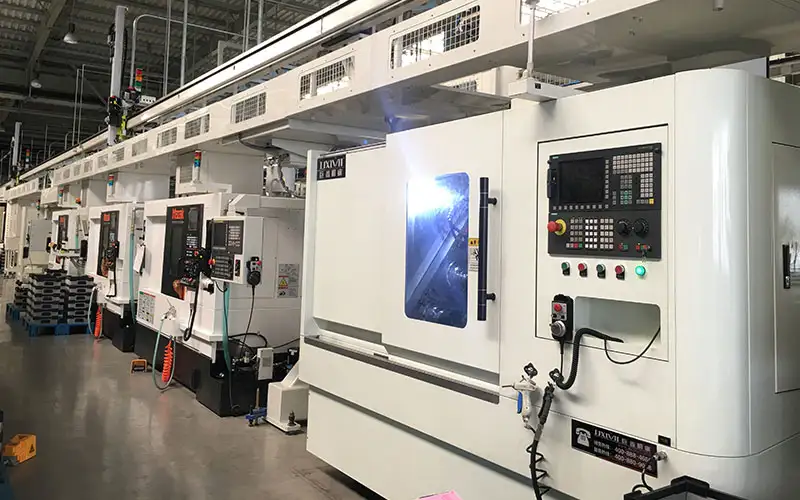
The JXLC63D features a dual‑station, dual‑spindle configuration, equipped with two independent machining units. The specific machining tasks and process sequences can be tailored to suit the workpiece geometry, machining requirements, and on‑site production conditions.

03 Application Results: Machining accuracy improved, and tool wear reduced by 43%
Following the equipment’s commissioning, based on customer feedback, the following key outcomes have been achieved.
Mitigating datum errors caused by heat-treatment distortion
By performing finish turning based on the actual condition of the workpiece after quenching, the issue of datum shift caused by heat‑treatment‑induced distortion has been mitigated, thereby providing more favorable machining conditions for the subsequent precision finishing of critical features.
Improved internal bore roundness, end-face runout, and coaxiality.
Customer feedback indicates that the roundness of the gear’s inner bore, end-face runout, and coaxiality have all been significantly improved, thereby enhancing the machining quality of critical areas.
Batch processing offers better consistency.
In mass production, improving the datum offset of workpieces and the finish‑machining quality of critical features helps enhance machining consistency across different parts.
Tool wear reduced by 43%
Following implementation, customers reported a 43% reduction in tool wear. This improvement helps lower tool consumption and associated costs in the production process. The exact cost savings will depend on factors such as tool purchase price, tool life, machining volume, and the accounting period used for analysis.
04 Equipment Operating Status: Stable operation, with routine maintenance as the primary focus.
At present, the equipment is operating stably, with no significant issues in maintaining its accuracy, and routine maintenance is the primary focus.
For gear‑manufacturing enterprises engaged in continuous mass production, the value of equipment lies not only in its machining accuracy but also in its ability to adapt to actual production processes, maintain stable operation, and meet long‑term usage requirements.

05 Case Summary
Deformation, warping, and other dimensional changes that occur after gear heat treatment can lead to misalignment of the inner bore, end faces, and machining datums. How to perform finish machining in response to the post‑quenching condition of the workpiece is a practical issue that relevant manufacturers must address.
In 2023, a gear manufacturing plant in Shandong deployed the Juxin JXLC63D dual‑station, dual‑spindle CNC vertical lathe to perform precision internal‑bore and end‑face machining on gears after quenching, completing both operations in a single setup.
According to customer feedback, after implementing the equipment, baseline errors caused by heat‑treatment distortion have been reduced, and improvements have been observed in bore roundness, end‑face runout, coaxiality, and batch-to-batch consistency. Tool wear has decreased by 43%, and the equipment is currently operating stably.
For gear‑manufacturing enterprises facing challenges such as heat‑treatment distortion, datum shift, and tight control of inner‑bore and end‑face dimensions, it is possible to evaluate quench‑after‑turning processes and equipment solutions tailored to their specific production needs, taking into account workpiece geometry, heat‑treatment condition, machining allowances, and precision requirements.
Note: The machining results and tool wear data presented in this document are based on customer feedback; actual performance may vary depending on workpiece material, heat‑treatment condition, machining allowance, cutting tools, and process parameters.






Contact Us
WhatsApp:
Contact E-mail:
Contact Address: